
With its large, round leaves and silvery green stripe patterns, the Calathea Orbifolia instantly draws attention as one of the most stunning prayer plant varieties you can grow indoors. If you’re seeking a tropical houseplant that combines beauty with calming presence, this one offers just the right balance—provided you understand its specific plant care needs.
Calathea Orbifolia is a stunning indoor plant known for its large, silver-green striped leaves. It thrives in medium, indirect light and high humidity. Keep the soil consistently moist but not soggy, and avoid cold drafts. With proper care, this peacock plant adds elegance and calm to modern spaces, making it a favorite for plant lovers.

Heart-shaped iron planter for succulents and cactus, Nordic style lightweight metal pot, ideal for home, office, balcony and garden decor
Ahead, you’ll find practical tips on light, water, soil, and repotting—plus insight on how to spot early signs of stress and maintain this lush houseplant long term. Let’s begin your path to expert plant care.
How to Repot, Prune, and Maintain a Healthy Calathea Orbifolia – Medium
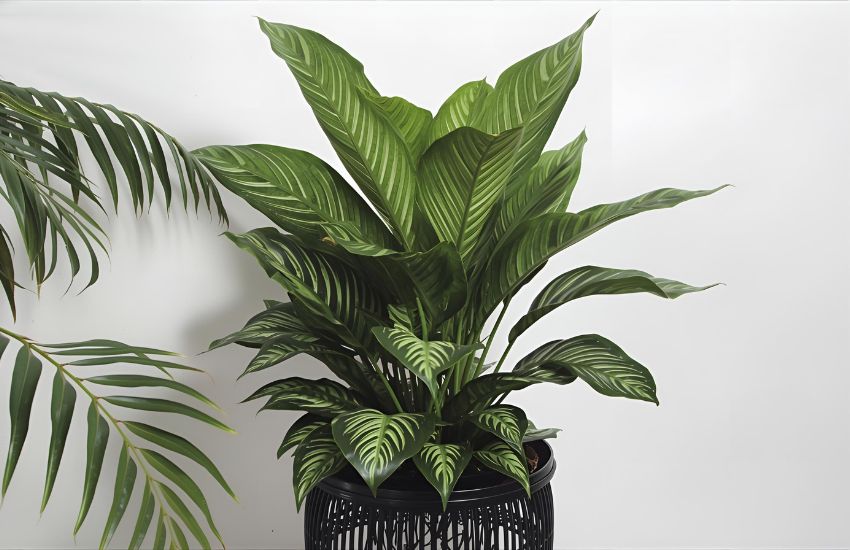
Caring for your Calathea orbifolia plant goes beyond light and water—it also requires occasional repotting, pruning, and steady maintenance. While this stunning species, native to the tropical rainforests of Bolivia, is easy to care for once settled, it thrives only with consistent care and attention. With its large leaves, silvery-green stripes, and sensitivity to poor environments, thoughtful maintenance ensures it stays lush and vibrant.
When and How to Repot Calathea Orbifolia
You should repot your orbifolia calathea every 1–2 years, ideally in the growing season (spring or early summer). Look for signs like roots emerging from drainage holes, soil too dry despite watering, or slowed new growth. Select a slightly larger pot with proper drainage holes, and use a rich potting mix—ideally one combining peat, coco coir, and perlite for airiness and moisture control.
Always keep the root ball intact during repotting, and avoid letting the roots sit in standing water. Ensure the potting soil is moist but not soaked. This step helps your calathea plants adjust quickly with minimal shock.
Pruning for Health and Appearance
Regular pruning keeps your calathea orbifolia plant looking neat and prevents fungal issues. Use clean, sharp scissors to remove yellowing or brown edges. Trim damaged large leaves at the base, especially if they block new growth. Avoid excessive pruning; gentle shaping during the growing season is best for recovery.
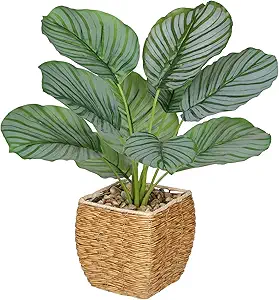
Artificial Calathea orbifolia plant in rattan basket, realistic faux greenery for indoor home, office, farmhouse, wedding and decor styling
Maintaining Ideal Conditions
- Light Conditions: Provide medium indirect light. Avoid direct sunlight or direct sun, as this can scorch the silvery-green foliage.
- Water: Always use filtered or rain water to avoid mineral buildup. Let the top inch of potting soil dry before watering. Never allow the plant to sit in standing water.
- Humidity: High humidity is critical. Maintain it above 50% by using a humidifier, mist the leaves gently, or place the pot on a pebble tray filled with water.
- Routine Care: Clean dust off the leaves weekly, and rotate the plant to promote even growth.
Conclusion
Caring for your Calathea Orbifolia means more than just admiring its silvery-green stripes and lush green leaves—it requires steady attention to its environment and routine maintenance. From pruning dead or damaged foliage to repotting with well-draining soil, each step supports healthier growth and prevents common issues like yellowing leaves, leaf droop, or transplant shock. Always check the soil before watering—use a moisture meter or simply your finger, and allow the soil to dry slightly between waterings. Keeping moist soil, not soggy, is key.
Maintain consistent humidity levels, especially in a humid climate or with tools like a humidifier. Avoid tap water whenever possible—opt for filtered water or filtered or rainwater to protect the delicate leaf edges from browning. Provide bright light that’s indirect, and keep a stable indoor temperature to avoid cold damage.
As your plant grows, new leaves move in response to light and time, a signature trait of the marantaceae family. This beautiful plant thrives in low to medium light if you support its needs with care and a fertilizer high in nitrogen, once a month during the growing season.
Set of 4 artificial snake plants, realistic mini tropical faux greenery for home, office and garden decor without vase included